








Winter Shipping: How Cold Weather Impacts Supply Chains and How to Stay Ahead
Winter brings more than colder temperatures — it fundamentally changes how supply chains operate. Across the U.S., snow, ice, and extreme cold introduce operational risks that can quickly disrupt freight movement, tighten capacity, and increase costs if they’re not planned for in advance.
As winter conditions intensify, shippers across industries must account for longer transit times, fluctuating capacity, and increased demand for specialized equipment. Understanding these seasonal dynamics — and preparing for them early — is essential to maintaining reliable, efficient supply chains.
How Cold Weather Impacts Transportation
Winter weather affects freight at every stage of the journey. Snowstorms, icy roads, and reduced visibility can slow traffic, limit route options, and delay pickups and deliveries. What might normally be a one-day lane can easily extend into two or three days during severe weather events.
Cold weather also impacts operations at terminals and distribution centers. Snow-covered docks, icy ramps, and safety restrictions can slow loading and unloading times, increasing dwell time and reducing overall network efficiency. These delays often compound as freight moves through multi-stop or LTL networks.
At the same time, winter frequently coincides with seasonal demand surges, further straining already limited transportation capacity.
Capacity Tightens — and Costs Rise
One of the most significant winter challenges is reduced equipment availability. Fewer available trucks, weather-related route disruptions, and higher demand across the market combine to create tighter capacity and upward pressure on rates.
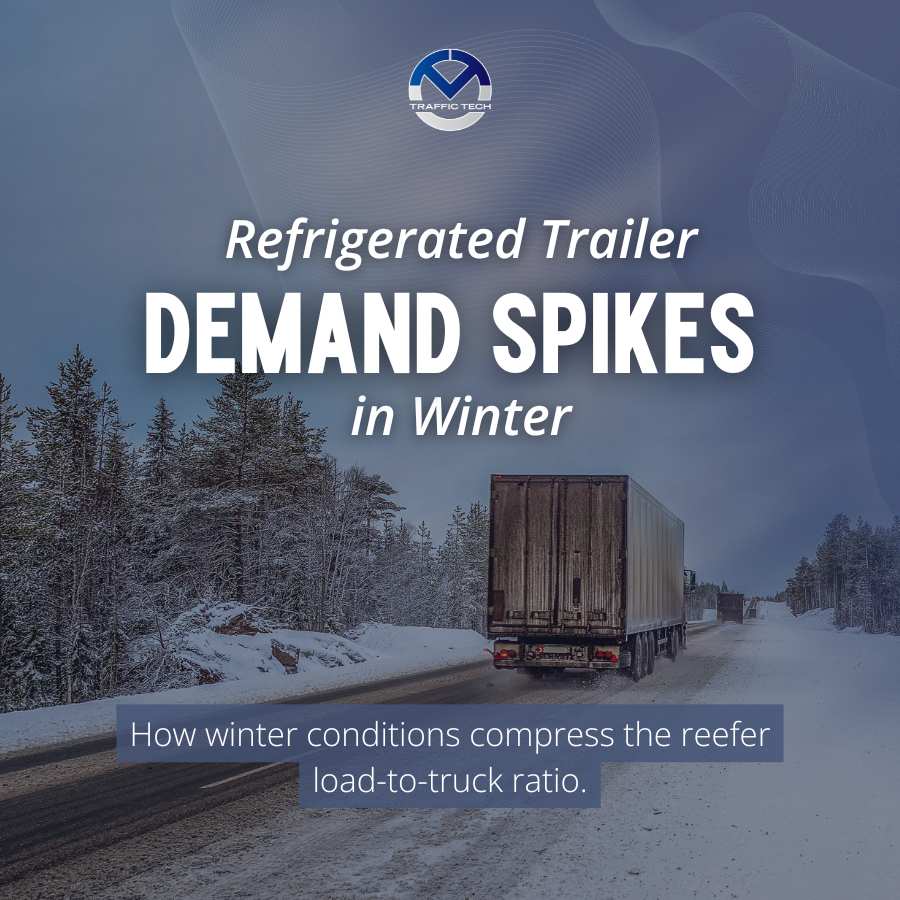
This is especially noticeable in temperature-controlled transportation. During colder months, refrigerated trailers are not only used for traditional perishable freight, but also for shipments that must be protected from freezing. As a result, reefer demand increases while available equipment becomes more competitive.
Without early planning, shippers may face limited options, last-minute pricing spikes, or service disruptions during critical shipping windows.
Industry-Specific Winter Risks
Winter conditions don’t impact every industry in the same way. Certain sectors face heightened risk when temperatures drop:
- Pharmaceuticals and healthcare: Many products require strict temperature control and protection from freezing. Even brief exposure to extreme cold can compromise product integrity.
- Food and beverage: Perishable goods face risks of spoilage or freeze damage without proper temperature management.
- Chemicals and industrial products: Many materials are freeze-sensitive and require specialized handling to maintain safety and quality.
- Retail and consumer goods: Weather-related delays during high-demand periods can impact inventory availability and customer expectations.
For these industries, winter shipping isn’t just about delays — it’s about protecting product quality and maintaining compliance.
Why Preparation Matters More in Winter
Winter shipping is rarely predictable, but it is manageable with the right strategy. Successful winter logistics relies on proactive planning rather than reactive problem-solving.
This includes building realistic transit buffers, securing capacity earlier than usual, identifying alternative routing options, and ensuring proper packaging and temperature protection for sensitive freight. Clear communication across carriers, shippers, and receivers is also critical when conditions change quickly.
How Traffic Tech Supports Winter Shipping
At Traffic Tech, we help customers navigate winter volatility through experience, flexibility, and proactive execution.
Our teams work closely with shippers to plan ahead for cold-weather risks, secure reliable capacity, and protect temperature-sensitive freight across modes. With strong carrier partnerships, multi-modal expertise, and real-time visibility tools, we help customers adapt quickly when winter conditions disrupt normal operations.
Winter may be unpredictable — but your supply chain doesn’t have to be.
By understanding seasonal challenges and working with a logistics partner that plans ahead, shippers can maintain reliability, protect their freight, and keep supply chains moving throughout the coldest months of the year.